
Blog
Best Packaging Options for Dates
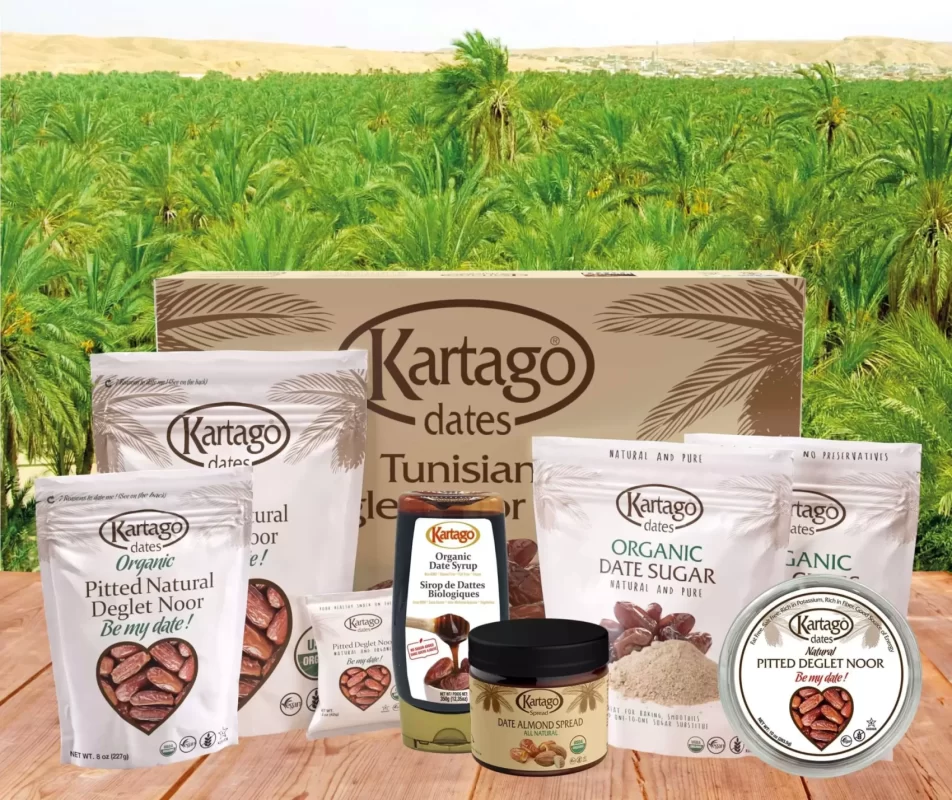
Dates are sold in many different channels – supermarkets, organic stores, ethnic groceries, online shops and bulk sections. For each of these channels, the dates retail packaging plays a crucial role: it protects the product, communicates your brand and influences buying decisions.
In this guide, we compare the main packaging options for dates, from pouches and boxes to trays and bulk cartons, with practical advice for retail and wholesale projects.
1. What Good Packaging Should Do for Dates
Whatever format you choose, effective dates packaging should:
- protect the fruit from humidity, oxygen and physical damage,
- preserve texture, flavour and colour during shelf life,
- communicate origin, quality and certifications,
- fit your logistics and shelf space,
- match your brand’s sustainability strategy.
For detailed information on shelf life and storage conditions, see our article on organic dates shelf life & storage.
2. Pouches and Doypacks
Resealable pouches and doypacks have become a standard in the dried fruit category, especially on organic shelves and in modern supermarkets.
- large printable surface for branding and information,
- resealable zip for convenience and portion control,
- good barrier properties with the right laminate,
- ideal for 150–500 g packs.
- requires dedicated filling equipment,
- standard laminates may be difficult to recycle,
- shape can deform if not filled correctly.
Pouches are often the first choice for organic dates for retail & wholesale, especially when targeting health-conscious consumers.
3. Carton Boxes and Trays
Rigid carton formats are widely used for premium dates, gifting ranges and traditional markets.
- strong visual impact on shelf and in gift displays,
- good stackability and protection,
- can combine window and printing for storytelling,
- easy to integrate into standard retail planograms.
- may require an inner bag or tray to protect dates,
- slightly higher material and packing costs,
- more complex to optimize for e-commerce shipments.
Boxes and trays are particularly suited for premium Medjool dates and seasonal offers, or for ranges where presentation is a key part of the value proposition.
4. Flowpacks and Snack-Size Packaging
Flowpacks and individual snack-size packaging focus on convenience and portability.
- single-serve packs for on-the-go snacking,
- multi-pack concepts with several small sachets in a larger box,
- ideal for kids’ snacks, sports and vending channels.
5. Bulk Cartons for Wholesale and Repacking
Bulk cartons remain the most efficient option for wholesale buyers, food manufacturers and central warehouses that will repack dates locally.
- 10–12 kg cartons for industrial use and repacking,
- high-efficiency in container loading and storage,
- flexibility to adapt retail packaging at destination.
Bulk formats are managed by our bulk organic pitted dates supplier team and are closely connected to our main wholesale pillar page.
6. Vacuum and Modified Atmosphere (MAP) Options
For some projects, vacuum or modified atmosphere (MAP) packaging can help improve stability and logistics:
- reduced oxygen exposure,
- more compact format for shipping,
- better control of product movement inside the pack.
These solutions are particularly interesting for industrial clients, B2B shipments and long-distance exports, where packaging and quality control must work together.
7. Sustainability and Eco-Friendly Dates Packaging
Sustainability is a central topic for dates retail packaging. Brands and retailers increasingly request:
- recyclable or mono-material laminates where possible,
- paper-based solutions with limited plastic,
- optimized pack sizes to reduce waste,
- clear communication about material and end-of-life.
Sustainable packaging works best when aligned with your organic and quality certifications and, when relevant, with Fair Trade and responsible sourcing messages.
Need Help Choosing the Best Packaging for Your Dates?
Kartago Dates supports you from bulk supply to retail-ready packs and private label concepts. Share your target channels, volumes and price positioning, and we will recommend the most suitable dates retail packaging options for your project.
FAQ – Best Packaging Options for Dates
What is the best packaging option for dates?
There is no single best option. Pouches and doypacks work very well for organic shelves, while boxes, trays and snack formats are ideal for premium lines and convenience. Bulk cartons are best for wholesale and repacking.
Which dates retail packaging formats work best in supermarkets?
Supermarkets usually perform well with resealable pouches between 200 and 500 g, plus gift boxes and snack packs in specific locations or seasonal displays.
How does packaging impact dates shelf life?
Packaging helps protect dates from moisture, oxygen and handling. Combined with correct storage temperature and humidity, it helps preserve texture and flavour throughout the indicated shelf life.
Can I use eco-friendly packaging for dates?
Yes, many brands explore recyclable or paper-based formats. The key is to balance sustainability with food safety and shelf life needs, and to communicate clearly with consumers.
